Web Development
What your company website needs to have in 2026
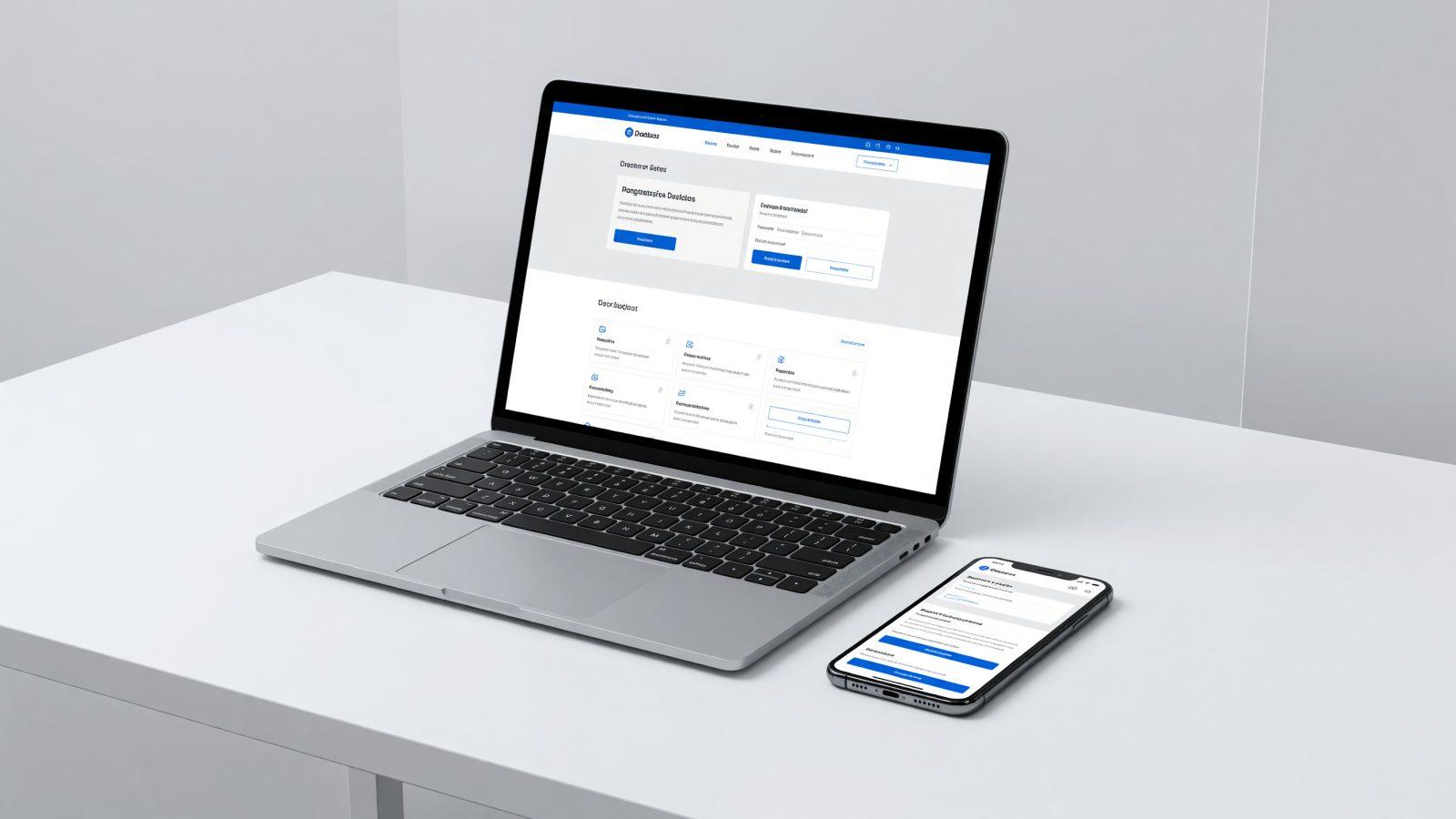
A good company website does three things fast: it explains what you do, shows you can be trusted, and lets a visitor reach you in two clicks. Design, long copy and animations matter far less. If a visitor does not understand what you offer in the first ten seconds and cannot find a contact button, they leave for a competitor.
The minimum page structure
A company site needs a handful of fixed pages, not dozens without purpose: homepage, about, services (each with its own page, not one general block of text), case studies or portfolio, and contact. A blog is optional, useful for SEO long term, but not required at launch.
- Homepage — the first impression; it must answer "what do you do" and "for whom" quickly.
- About — who you are, since when, what sets you apart.
- Services — one page per service, not a generic list.
- Contact — full details and a short form.
You do not need 20 pages on day one. A small company with 3-4 clearly defined services can launch with 6-7 well-written pages; the site grows naturally as recurring client questions or new services show up.
What goes on the homepage
The homepage is not the place for agency taglines. It needs a clear headline stating what you do and for whom, 3-4 main services each linking to its own page, one trust signal (years in business, number of clients, certifications) and a visible call to action such as "Get a quote" or "Book an audit". A company with 15 employees selling B2B services does not need stock photos of people smiling — it needs clarity. Add a short teaser with 2-3 relevant numbers — active clients, years in business, completed projects — right on the homepage, not only on a separate page.
The services page and the contact page
Each service deserves its own page describing what it involves, who it fits and what the client gets at the end — this also helps with SEO optimization, since every page can answer a specific search. The contact page needs an address, phone, email, a map and a short form: name, email, message. Skip the ten mandatory fields — the fewer you ask for, the more visitors actually submit it. State an expected response time, for example under 24 hours — visitors want to know if they get a fast reply or wait a week.
Trust signals: case studies and reviews
People do not trust marketing copy, they trust examples. A short case study — a company with a certain profile had a problem, you solved it with a concrete solution, with a measurable result — convinces more than a whole "about us" page. Add real Google reviews, client logos (with permission) and, if you have them, certifications relevant to your field. Three or four well-written case studies, with concrete numbers — implementation time, estimated savings, number of users — do more than ten generic testimonials that just say "professional team, would recommend".
Mobile, speed and legal obligations
Over half of visitors arrive from a phone, so the mobile version is not optional. Speed matters just as much: a site that takes more than 3-4 seconds to load loses visitors before they read anything — see also performance optimization. Check whether text is readable on a small screen without zooming, and whether buttons are large enough for a finger, not just a mouse cursor. Legally, the site needs terms and conditions, a privacy policy, a cookie banner that actually works (not just decorative), and company details — registration number, registered office — visible in the footer.
What most company websites are missing
In practice, most company websites are missing: a visible phone number in the header, separate service pages instead of one general text, real trust signals rather than plain claims, a valid SSL certificate, and maintenance after launch. Many also lack a clear plan for who updates the content after launch, and a renewal schedule for the legal pages. A site left untouched for three years, with old prices and outdated plugins, becomes a liability, not an asset — which is why website maintenance matters too.
How to start
Start from a clear list of the pages you need and your main goal — sales, bookings, quote requests — not from a design. If you want a presentation website built right from the start, with SEO built in, or you just want an audit of your current site, contact us for a no-obligation talk.